These are the key questions that need answering if the BBKA wishes to be seen as fairly representing the interests of British bees and bee keepers:
(1) When the BBKA Executive made the decision to endorse the initial four insecticides, what due diligence procedures did it employ that led to the conclusion that these insecticides were 'bee-friendly'? Did the manufacturers provide peer-reviewed, independent research to back up their claims?
(2) Was the Executive aware, for example, of the research (i) published in 1995 - 6+ years before the decision - that demonstrated deltamethrin (one of the endorsed pesticides) to be deadly to bees, even in extremely small doses? And the research (ii) published 1993 that clearly states 'Cypermethrin is highly toxic to bees'?
(3) If the Executive was aware of this research, what led it to ignore or override its findings?
(4) If the Executive was not aware of this research, does it still consider that it undertook due diligence before endorsing these pesticides?
(5) Did the Executive, during the subsequent years of endorsement, keep a review on published research about the endorsed pesticides?
(6) And is the Executive familiar with the research (iii) published in 2005 that shows both cypermethrin and deltamethrin to be 'highly toxic to honeybees'? If not, please review your answer to Q5.
(7) It is clear from Dr Bernie Doeser's review of the science (sent to BBKA November 2 2010) that the very pesticides the BBKA endorsed are very far from being 'bee-friendly'; in fact three of them are among the five most toxic pesticides in their class.(iv)
In the light of this review, do you still think you made the right decisions? And will you be taking up Dr Doeser's generous offer of expert help and advice in such matters?
(8) In the light of the above, the BBKA executives who were responsible for the endorsement policy appear to have been either:
(a) negligent in their assessment of published research, or
(b) reckless in their endorsement of products known to be toxic to bees.
Which do you consider to have been the case?
(9) Why did the BBKA Executive fail to support their colleagues in Germany, Italy, France, Spain and Belgium in a call for the systemic, neurotoxic, neonicotinoid insecticides Imidacloprid, Thiamethoxam and Clothianidin to be removed from the European list of permitted agricultural chemicals? (v)
(10) What measures do you propose to put in place to ensure that:
(a) BBKA takes a firm stance against the introduction into our environment of unnecessary toxic chemicals, especially the widely-condemned neonicotinoids? (vi)(vii)
(b) BBKA members are not again embarrassed by having to apologize to the rest of the world for being represented by a body that endorses bee-killing chemicals?
(c) Members of the BBKA Executive, whether elected or co-opted, make a full, public declaration of any financial, academic or research interests that they hold in partnership with pesticide companies, the agricultural, pharmaceutical and food industries, - or any other industry that could be deemed a conflict of interest.
(d) BBKA supports the organic/pesticide-free farming movement, including the Soil Association, the Wholesome Food Association, Garden Organic and the Biodynamic Agricultural Association, in their encouragement to farmers to use non-chemical growing methods?
Monday, January 10, 2011


Tuesday, November 30, 2010
Do Creationists Run Bee Keeping Associations?
There is considerable arrogance in the notion that we must know better than the bees do what is best for them, yet the publication of Charles Darwin's pivotal book, On The Origin of Species just seven years after Langstroth's Hive and the Honey Bee in November 1859 , seems to have made but little impact on this general attitude, even 150 years later. It is as if creationists still hold sway over bee keeping associations.
At the heart of modern, 'natural beekeeping' philosophy is the principle, which I hold to be self-evident, that bees know best what is good for them and that our job is to listen, to watch and to follow their lead. Contrast this with the teachings of the disciples of Langstroth, who insist that they know best when a queen should be replaced, which strain of bee she should be replaced with, and what size cells she should be allowed to lay into. And then they wonder why the honeybee appears to suffer from parasites, 'mystery disappearances' and diseases that were almost unknown before the advent of the movable-frame hive and re-cycled wax foundation.
At the heart of modern, 'natural beekeeping' philosophy is the principle, which I hold to be self-evident, that bees know best what is good for them and that our job is to listen, to watch and to follow their lead. Contrast this with the teachings of the disciples of Langstroth, who insist that they know best when a queen should be replaced, which strain of bee she should be replaced with, and what size cells she should be allowed to lay into. And then they wonder why the honeybee appears to suffer from parasites, 'mystery disappearances' and diseases that were almost unknown before the advent of the movable-frame hive and re-cycled wax foundation.
Wednesday, November 24, 2010
Have we been lied to for 10 years?
Have we been lied to for 10 years? Or has the pesticide industry been lying to the British Bee Keepers Association?
http://tinyurl.com/35sen6k
This episode will be of particular interest to British beekeepers - especially those who are - or have been - or may one day be members of the British Bee Keepers Association - the BBKA.
Wherever you are, I think you will find something of interest, as I am interviewing a man who has looked very carefully at the whole issue of pesticides and their potential impact on bees, with particular reference to the BBKA's decade-long policy of taking money from the pesticide industry in return for the use of the BBKA logo on certain products, and the endorsement of such products as being somehow 'bee-friendly'.
Many people - when told that a bee keepers association endorses insecticides at all - are shocked and surprised, as was Dr Bernie Doeser, who has recently produced an independent report that is highly critical of the way the BBKA have managed - or failed to manage - their policy.
Bernie Doeser's report reveals barely believable levels of negligence and incompetence in this whole episode, starting with the fact that the BBKA actually endorsed some of the pesticides that - far from being bee-friendly - are actually among the top five most lethal pesticides in their class.
I had to record the interview with Bernie Doeser in the rather echo-y cafe of the Tate gallery in the seaside town of St Ives in Cornwall, and although we managed to arrange coats and hats to absorb much of the background noise, you can still tell that it is a cafe.
(And for those of you outside the UK, Cornwall is in the bottom left hand corner of England, and England is part of that little island off the coast of Europe called Great Britain, the United Kingdom or just the UK.)
Please spread this link - http://tinyurl.com/35sen6k
http://tinyurl.com/35sen6k
This episode will be of particular interest to British beekeepers - especially those who are - or have been - or may one day be members of the British Bee Keepers Association - the BBKA.
Wherever you are, I think you will find something of interest, as I am interviewing a man who has looked very carefully at the whole issue of pesticides and their potential impact on bees, with particular reference to the BBKA's decade-long policy of taking money from the pesticide industry in return for the use of the BBKA logo on certain products, and the endorsement of such products as being somehow 'bee-friendly'.
Many people - when told that a bee keepers association endorses insecticides at all - are shocked and surprised, as was Dr Bernie Doeser, who has recently produced an independent report that is highly critical of the way the BBKA have managed - or failed to manage - their policy.
Bernie Doeser's report reveals barely believable levels of negligence and incompetence in this whole episode, starting with the fact that the BBKA actually endorsed some of the pesticides that - far from being bee-friendly - are actually among the top five most lethal pesticides in their class.
I had to record the interview with Bernie Doeser in the rather echo-y cafe of the Tate gallery in the seaside town of St Ives in Cornwall, and although we managed to arrange coats and hats to absorb much of the background noise, you can still tell that it is a cafe.
(And for those of you outside the UK, Cornwall is in the bottom left hand corner of England, and England is part of that little island off the coast of Europe called Great Britain, the United Kingdom or just the UK.)
Please spread this link - http://tinyurl.com/35sen6k
Wednesday, November 17, 2010
Is the BBKA planning an even cosier relationship with Bayer?
The headlines have been about BBKA ending their pesticide endorsements, but look more closely: they are planning a deeper relationship with the same corporations.
Update re. BBKA endorsement of insecticides
(1) Summary: For the last ten years or so, the British Bee Keepers Association has received sums of money in return for their endorsement of several pyrethroid-based insecticides as 'bee-friendly if used according to the instructions'. This was kept quiet by the BBKA executive for several years, and was widely criticized when it came to light.
This issue was put up for debate by Twickenham BKA at the 2009 and 2010 Annual Delegates Meetings, but the status quo held, largely due to the BBKA's undemocratic voting system (based on regional representatives rather than one person, one vote).
(2) My interest in this is a strong personal belief that a charity constituted to protect the interests of bees should not accept money from corporations whose commercial interests include the sale of extremely toxic insecticides, proven to be lethal to bees, on the grounds that such transactions will inevitably influence BBKA policies and actions.
As evidence for this, at no time since this endorsement began has the BBKA ever spoken out against the use of agricultural insecticides, or warned against the potential dangers of systemic pesticides in GM crops, or allowed any statement critical of the pesticides industry to appear on their web site or in any of their publications. In fact, the one time they invited members to comment on this policy on their web site, they received a series of messages criticizing their policy and responded by censoring the comments and soon afterwards, removing the page. The full story, including the censored comments, can be seen here - http://www.britishbeekeeping.com
Also, I have seen no endorsement of the organic movement in general, nor the Soil Association in particular, for their policy of creating insect-friendly habitat and minimizing the use of chemicals on agricultural land. In fact, I have heard members of the BBKA executive, past and present, including long-term technical advisor Dr Norman Carreck, speak out against orgainc farming (quote: "Crop rotation is old-fashioned - biotechnology is the way forward.").
(3) Dr Bernie Doeser's recent report on the BBKA pesticide endorsement affair reveals serious shortcomings in the way it was handled, as well as underlining the true toxicity of the pesticides endorsed as 'bee friendly' - http://tinyurl.com/37z4z65
This report clearly caused consternation at BBKA HQ, as they immediately went to work to devise a way to prevent the pesticides issue from being aired at the January 2011 Annual Delegates Meeting for the third successive year, as proposed by the Twickenham branch and backed by a number of other BKAs.
(4) BBKA appears to have conducted a 'strategic review', either previously or in response to this report, in which they propose even closer ties with agri-biotech corporations [see http://tinyurl.com/35hzwd5] while taking the emphasis off direct endorsement of insecticides.
The following email was recently sent to all BBKA local associations:
From: BBKA HQ
Date: 15 November 2010 16:14
Subject: BBKA Strategic Review
Dear Association Secretary
Attached to this email is a statement about a strategic review that the BBKA Trustees have undertaken.
As part of this review you will see that our policy with regard to our endorsement of specific products has changed. This decision was taken by the Trustees a while ago as part of this wider strategic review, and would have been announced in due course as part of the results of that review. It was however decided in view of the fact that a debate on the narrow issue of endorsement was likely at the forthcoming Annual Delegates Meeting (ADM) it was better to make the decision public at this time.
The statement refers to a wider engagement with the plant protection industry and as a example of the way this can work. There will be a leaflet inserted in the December edition of the BBKA News produced by the Crop Protection Association (CPA). The BBKA was consulted on the production of the leaflet and tried to ensure that best practice in relation to honey (and indeed) other bees was incorporated.
Finally the trustees are putting forward a motion to the Annual Delegates Meeting (ADM) asking for delegates support for this new policy. Details of this motion will be sent to association delegates and secretaries and I would ask that you debate the new policy locally and make your views known to your delegate in good time for the January ADM.
Martin Smith
President
BBKA Strategic Review http://tinyurl.com/35hzwd5
(5) My comments:
My first reaction is revulsion at the BBKA adopting the NewSpeak phrase 'crop protection industry' as a harmless-sounding label for the 'agricultural poison and pollution industry' it really is.
Far from distancing themselves from these corporations, they appear to be ever more willing to embrace them (and their vocabulary) and thus further compromise their ability to speak freely about the dangers to bees from agricultural pesticides.
For me, the ethical considerations trump everything. For an organisation purporting to be working in the interests of bees to publicly walk hand in hand with the manufacturers of the very substances that are killing bees, other insects, birds and ultimately entire food chains, as well as endangering public health, while failing in any way to support the organic movement, is utterly anathema.
(6) Suggested action:
(a) Request the BBKA sever all financial ties with corporations that have any interest in the manufacture or sale of insecticides or other agricultural chemicals known to be toxic to bees
(b) Request that the BBKA give explicit support for the Soil Association and the organic movement in general for their efforts in creating more habitat for bees and other pollinators.
(c) Request complete electoral reform in the BBKA, requiring all such matters to be openly debated, publicly reported on and voted on by all members.
Update re. BBKA endorsement of insecticides
(1) Summary: For the last ten years or so, the British Bee Keepers Association has received sums of money in return for their endorsement of several pyrethroid-based insecticides as 'bee-friendly if used according to the instructions'. This was kept quiet by the BBKA executive for several years, and was widely criticized when it came to light.
This issue was put up for debate by Twickenham BKA at the 2009 and 2010 Annual Delegates Meetings, but the status quo held, largely due to the BBKA's undemocratic voting system (based on regional representatives rather than one person, one vote).
(2) My interest in this is a strong personal belief that a charity constituted to protect the interests of bees should not accept money from corporations whose commercial interests include the sale of extremely toxic insecticides, proven to be lethal to bees, on the grounds that such transactions will inevitably influence BBKA policies and actions.
As evidence for this, at no time since this endorsement began has the BBKA ever spoken out against the use of agricultural insecticides, or warned against the potential dangers of systemic pesticides in GM crops, or allowed any statement critical of the pesticides industry to appear on their web site or in any of their publications. In fact, the one time they invited members to comment on this policy on their web site, they received a series of messages criticizing their policy and responded by censoring the comments and soon afterwards, removing the page. The full story, including the censored comments, can be seen here - http://www.britishbeekeeping.com
Also, I have seen no endorsement of the organic movement in general, nor the Soil Association in particular, for their policy of creating insect-friendly habitat and minimizing the use of chemicals on agricultural land. In fact, I have heard members of the BBKA executive, past and present, including long-term technical advisor Dr Norman Carreck, speak out against orgainc farming (quote: "Crop rotation is old-fashioned - biotechnology is the way forward.").
(3) Dr Bernie Doeser's recent report on the BBKA pesticide endorsement affair reveals serious shortcomings in the way it was handled, as well as underlining the true toxicity of the pesticides endorsed as 'bee friendly' - http://tinyurl.com/37z4z65
This report clearly caused consternation at BBKA HQ, as they immediately went to work to devise a way to prevent the pesticides issue from being aired at the January 2011 Annual Delegates Meeting for the third successive year, as proposed by the Twickenham branch and backed by a number of other BKAs.
(4) BBKA appears to have conducted a 'strategic review', either previously or in response to this report, in which they propose even closer ties with agri-biotech corporations [see http://tinyurl.com/35hzwd5] while taking the emphasis off direct endorsement of insecticides.
The following email was recently sent to all BBKA local associations:
From: BBKA HQ
Date: 15 November 2010 16:14
Subject: BBKA Strategic Review
Dear Association Secretary
Attached to this email is a statement about a strategic review that the BBKA Trustees have undertaken.
As part of this review you will see that our policy with regard to our endorsement of specific products has changed. This decision was taken by the Trustees a while ago as part of this wider strategic review, and would have been announced in due course as part of the results of that review. It was however decided in view of the fact that a debate on the narrow issue of endorsement was likely at the forthcoming Annual Delegates Meeting (ADM) it was better to make the decision public at this time.
The statement refers to a wider engagement with the plant protection industry and as a example of the way this can work. There will be a leaflet inserted in the December edition of the BBKA News produced by the Crop Protection Association (CPA). The BBKA was consulted on the production of the leaflet and tried to ensure that best practice in relation to honey (and indeed) other bees was incorporated.
Finally the trustees are putting forward a motion to the Annual Delegates Meeting (ADM) asking for delegates support for this new policy. Details of this motion will be sent to association delegates and secretaries and I would ask that you debate the new policy locally and make your views known to your delegate in good time for the January ADM.
Martin Smith
President
BBKA Strategic Review http://tinyurl.com/35hzwd5
(5) My comments:
My first reaction is revulsion at the BBKA adopting the NewSpeak phrase 'crop protection industry' as a harmless-sounding label for the 'agricultural poison and pollution industry' it really is.
Far from distancing themselves from these corporations, they appear to be ever more willing to embrace them (and their vocabulary) and thus further compromise their ability to speak freely about the dangers to bees from agricultural pesticides.
For me, the ethical considerations trump everything. For an organisation purporting to be working in the interests of bees to publicly walk hand in hand with the manufacturers of the very substances that are killing bees, other insects, birds and ultimately entire food chains, as well as endangering public health, while failing in any way to support the organic movement, is utterly anathema.
(6) Suggested action:
(a) Request the BBKA sever all financial ties with corporations that have any interest in the manufacture or sale of insecticides or other agricultural chemicals known to be toxic to bees
(b) Request that the BBKA give explicit support for the Soil Association and the organic movement in general for their efforts in creating more habitat for bees and other pollinators.
(c) Request complete electoral reform in the BBKA, requiring all such matters to be openly debated, publicly reported on and voted on by all members.
Monday, October 18, 2010
Why GM is dangerous
Nature will always find a balance, but the balance position may not always suit us.
Natural balance is not static: it is dynamic. In a given ecosystem, one species may gain the upper hand for a while, but then its predators will thrive as well because of the abundance of food. If they are too efficient, the predator may reduce the prey species so far that they themselves suffer a dearth and a severe reduction in numbers, which creates a window for the return of the prey species. Unless some other factor intervenes - such as the inadvertent introduction of a new predator, or a novel chemical, into the ecosystem - this dynamic balance will persist indefinitely.
What humans do is mess with the ecosystem on many levels simultaneously, resulting in a complex set of interactions that cannot fully be anticipated or understood.
That is the single reason why I think GM is the most dangerous technology of all: not that it is necessarily toxic - although it may well be - not that it is in the hands of powerful, profit hungry psychopaths - although it is, and we should be very concerned about that - but that NOBODY understands or can possibly predict the potential ramifications of interfering with natural process at that level or on that scale.
Natural balance is not static: it is dynamic. In a given ecosystem, one species may gain the upper hand for a while, but then its predators will thrive as well because of the abundance of food. If they are too efficient, the predator may reduce the prey species so far that they themselves suffer a dearth and a severe reduction in numbers, which creates a window for the return of the prey species. Unless some other factor intervenes - such as the inadvertent introduction of a new predator, or a novel chemical, into the ecosystem - this dynamic balance will persist indefinitely.
What humans do is mess with the ecosystem on many levels simultaneously, resulting in a complex set of interactions that cannot fully be anticipated or understood.
That is the single reason why I think GM is the most dangerous technology of all: not that it is necessarily toxic - although it may well be - not that it is in the hands of powerful, profit hungry psychopaths - although it is, and we should be very concerned about that - but that NOBODY understands or can possibly predict the potential ramifications of interfering with natural process at that level or on that scale.
Tuesday, September 07, 2010
Buy me a coffee - help me do more for you!
You have probably noticed that there is a lot of free stuff on my site at www.biobees.com - articles, videos, PDFs, a free forum, a podcast - and I am constantly looking for ways to produce more material for you.
I do this because I believe that this work is the best use of my time and energy, and that by giving freely, enough will come back to provide for my needs. Thanks to those of you who have bought my book, and those who have attended one of my weekend events, I have so far been able to 'make ends meet'.
Now I would very much like to make more videos, do more writing, and turn more of my workshop projects into plans and instructions for you to experiment with. This means making a total commitment and giving up other sources of income in order to spend as much time as possible working to provide you with new and exciting material.
My laptop has served me well for nearly six years and now needs replacing. My bee-wagon is over 13 years old and may not make it through another test. I am regularly asked to do talks which take up time with little or no payment - sometimes not even covering expenses.
I am not seeking sympathy - I know I am better off than most of the world's population because I have a roof over my head and food to eat - but I do want to provide the best possible service and I do need the tools for the job.
I don't want to charge a membership fee as I want to make this site accessible to all, regardless of income.
So - only if you can afford it and you value what I am doing - would you mind making a small donation to help me give you more?
You can donate a single amount - say, the price of a coffee - or if you feel that giving up a coffee once a month would not hurt anyway, you can make a regular donation if you wish!
If you can't make a donation, your verbal expressions of support are also helpful - so please keep them coming!
Thanks for all your support so far - I really appreciate it.
I do this because I believe that this work is the best use of my time and energy, and that by giving freely, enough will come back to provide for my needs. Thanks to those of you who have bought my book, and those who have attended one of my weekend events, I have so far been able to 'make ends meet'.
Now I would very much like to make more videos, do more writing, and turn more of my workshop projects into plans and instructions for you to experiment with. This means making a total commitment and giving up other sources of income in order to spend as much time as possible working to provide you with new and exciting material.
My laptop has served me well for nearly six years and now needs replacing. My bee-wagon is over 13 years old and may not make it through another test. I am regularly asked to do talks which take up time with little or no payment - sometimes not even covering expenses.
I am not seeking sympathy - I know I am better off than most of the world's population because I have a roof over my head and food to eat - but I do want to provide the best possible service and I do need the tools for the job.
I don't want to charge a membership fee as I want to make this site accessible to all, regardless of income.
So - only if you can afford it and you value what I am doing - would you mind making a small donation to help me give you more?
You can donate a single amount - say, the price of a coffee - or if you feel that giving up a coffee once a month would not hurt anyway, you can make a regular donation if you wish!
If you can't make a donation, your verbal expressions of support are also helpful - so please keep them coming!
Thanks for all your support so far - I really appreciate it.
Tuesday, August 10, 2010
Learning by Playing Around - Avoiding Dogma
I get quite a few emails from people asking me to explain in more detail how to perform some aspect of top bar beekeeping.
Some of these ask for details of measurements that I have forgotten to add to a diagram, or the best type of wood to use, or the right size of mesh for floors - and I'm happy to provide information like this when I have it, and when I'm fairly sure of my ground.
Often, the questions are about matters for which there is no hard-and-fast answer, such as 'when should I split a colony?', or 'should I remove bees from my attic?', or 'how many bars should I use on my hive?', and I feel the need of these people for solid answers, even though usually there are none.
I think our education system has conditioned us to expect there to be simple answers to all questions - things we can memorize and write down on demand in an examination paper, and have it marked by the teacher as right or wrong.
But life isn't like that - and bees are certainly not like that.
In your first year of beekeeping, you can read a lot of books - and even take some exams - and feel like you know a lot about bees and beekeeping. We all know people like that - I was probably one of them! Recently, I heard about a beekeeper who passed all her BBKA modules and was actually taken on as a Seasonal Bee Inspector before she had completed her first full year of beekeeping! Then she made herself thoroughly unpopular among her local beekeepers by laying down the law to people who had been keeping bees for 30 years and more.
It is natural for beginners to ask questions - I encourage it and this is why we have a thriving Natural Beekeeping Forum with over 3,500 members around the world. Often, when I give a talk, I spend as much time answering questions as I do speaking, and that is how I like it - it's always more interesting to be responding to genuine interest in people than to be just talking at them. And when I don't know the answer, I say so.
As we accumulate experience, I think one of the most common things I hear is not so much that all our questions are answered, but that we find ourselves asking more and more of them - not necessarily of others, but of ourselves. Questions like, 'why do I do it this way?' and 'is there a better way to do this?' and, best of all, 'what would happen if I did this?'.
For me, it is vital that I go on questioning everything I do with bees, to make sure I don't get stuck in doing things only one way 'just because that's the way it's done'. Whenever I see someone doing something mechanically, I am likely to ask them why they do it, and if they can't come up with a better answer than 'because that is the way I have always done it', then I'm liable to ask a lot more questions! And that's what I like to do to myself.
And this is why I like the way we can discuss new ideas on the forum, and why we generally don't go in for 'laying down the law' of 'natural beekeeping'. We are a broad church, and we welcome people with no experience (even those who ask 'what does a honeybee look like?') as well as those who have been looking after bees for decades. By and large, we like to encourage the attitude of 'have you tried this' rather than 'you need to do it this way'.
Every month or so I receive an (un-asked for) email from a woman who claims some sort of hot-line to the mind of Rudolf Steiner, and on this basis makes largely unintelligible pronouncements about the way we should be keeping bees. She has convinced herself that 'there is only one way'.
As a lifelong dissenter from all things religious, I have an abiding dislike of dogma. I can see the damage that has been done in the world by the blind following of rules, and the last thing I want is to be making more rules. So I encourage everyone participating in the great experiment of 'natural beekeeping' to ask more questions, use your senses to seek answers from the bees themselves, and don't get bogged down in the pronouncements of people with axes to grind or 'gurus' to follow. What seemed to be true 100 years ago may be quite wrong, or no longer relevant to current conditions, or it may have some truth still in it, but in any case it is only one person's view.
Some of these ask for details of measurements that I have forgotten to add to a diagram, or the best type of wood to use, or the right size of mesh for floors - and I'm happy to provide information like this when I have it, and when I'm fairly sure of my ground.
Often, the questions are about matters for which there is no hard-and-fast answer, such as 'when should I split a colony?', or 'should I remove bees from my attic?', or 'how many bars should I use on my hive?', and I feel the need of these people for solid answers, even though usually there are none.
I think our education system has conditioned us to expect there to be simple answers to all questions - things we can memorize and write down on demand in an examination paper, and have it marked by the teacher as right or wrong.
But life isn't like that - and bees are certainly not like that.
In your first year of beekeeping, you can read a lot of books - and even take some exams - and feel like you know a lot about bees and beekeeping. We all know people like that - I was probably one of them! Recently, I heard about a beekeeper who passed all her BBKA modules and was actually taken on as a Seasonal Bee Inspector before she had completed her first full year of beekeeping! Then she made herself thoroughly unpopular among her local beekeepers by laying down the law to people who had been keeping bees for 30 years and more.
It is natural for beginners to ask questions - I encourage it and this is why we have a thriving Natural Beekeeping Forum with over 3,500 members around the world. Often, when I give a talk, I spend as much time answering questions as I do speaking, and that is how I like it - it's always more interesting to be responding to genuine interest in people than to be just talking at them. And when I don't know the answer, I say so.
As we accumulate experience, I think one of the most common things I hear is not so much that all our questions are answered, but that we find ourselves asking more and more of them - not necessarily of others, but of ourselves. Questions like, 'why do I do it this way?' and 'is there a better way to do this?' and, best of all, 'what would happen if I did this?'.
For me, it is vital that I go on questioning everything I do with bees, to make sure I don't get stuck in doing things only one way 'just because that's the way it's done'. Whenever I see someone doing something mechanically, I am likely to ask them why they do it, and if they can't come up with a better answer than 'because that is the way I have always done it', then I'm liable to ask a lot more questions! And that's what I like to do to myself.
And this is why I like the way we can discuss new ideas on the forum, and why we generally don't go in for 'laying down the law' of 'natural beekeeping'. We are a broad church, and we welcome people with no experience (even those who ask 'what does a honeybee look like?') as well as those who have been looking after bees for decades. By and large, we like to encourage the attitude of 'have you tried this' rather than 'you need to do it this way'.
Every month or so I receive an (un-asked for) email from a woman who claims some sort of hot-line to the mind of Rudolf Steiner, and on this basis makes largely unintelligible pronouncements about the way we should be keeping bees. She has convinced herself that 'there is only one way'.
As a lifelong dissenter from all things religious, I have an abiding dislike of dogma. I can see the damage that has been done in the world by the blind following of rules, and the last thing I want is to be making more rules. So I encourage everyone participating in the great experiment of 'natural beekeeping' to ask more questions, use your senses to seek answers from the bees themselves, and don't get bogged down in the pronouncements of people with axes to grind or 'gurus' to follow. What seemed to be true 100 years ago may be quite wrong, or no longer relevant to current conditions, or it may have some truth still in it, but in any case it is only one person's view.
Thursday, July 29, 2010
Water spray as a substitute for smoke
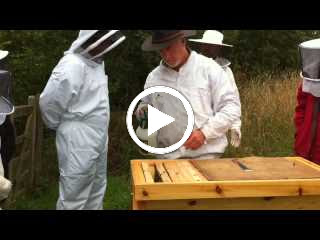
Video by Sheyne Bauermeister at the Yarner Trust, Welcombe, Devon. Phil Chandler demonstrating the use of a water spray as a substitute for smoke.
Monday, May 24, 2010
Swarming and Swarm Management
We are well into swarming season in the UK, much of Europe and the USA, so we are getting lots of swarm-related questions on the forum. This has prompted me to write an ebook dealing solely with the subject of swarming and swarm management from the point of view of 'barefoot beekeeping'.
You can find it at www.offthebookshelf.com along with a new-format edition of The Barefoot Beekeeper.
We want to hear your swarm stories on the forum - with pictures!
You can find it at www.offthebookshelf.com along with a new-format edition of The Barefoot Beekeeper.
We want to hear your swarm stories on the forum - with pictures!
Saturday, March 20, 2010
BBKA backed the wrong horse - but will they admit it?
New research from China has shown that synthetic pyrethroids - the same chemicals that we have been told to use in our hives against Varroa for the last 30 years, and the same chemicals that the British Bee Keepers Association cheerfully endorse as 'bee friendly' - are in fact toxic to bees and it has now been shown that 'the hatch rate of pyrethroid-exposed eggs was significantly depressed'.
This immediately raises the questions: why was this research not done BEFORE we were told to use them in our hives. And if it was done, how were the manufacturers allowed to fudge and/or conceal the results for so long?
Is it because - in the words of Dr L R B Mann, who was for 12 years advisor on toxins to the New Zealand Ministry of Health, "the chemical industry is, as an historical tendency, a refuge for crooks"?
Link to article: Widely Used Pesticides Found to Impair Bee Reproduction http://tinyurl.com/yzm2let
Link to article: High Levels of Miticides and Agrochemicals in North American Apiaries: Implications for Honey Bee Health http://tinyurl.com/yg2gssg
This immediately raises the questions: why was this research not done BEFORE we were told to use them in our hives. And if it was done, how were the manufacturers allowed to fudge and/or conceal the results for so long?
Is it because - in the words of Dr L R B Mann, who was for 12 years advisor on toxins to the New Zealand Ministry of Health, "the chemical industry is, as an historical tendency, a refuge for crooks"?
Link to article: Widely Used Pesticides Found to Impair Bee Reproduction http://tinyurl.com/yzm2let
Link to article: High Levels of Miticides and Agrochemicals in North American Apiaries: Implications for Honey Bee Health http://tinyurl.com/yg2gssg
Friday, March 19, 2010
Widely Used Pesticides Found to Impair Bee Reproduction
Posted: March 8, 2010
By Janet Raloff, for Science News' Science & the Public Blog
Pesticides are agents designed to rid targeted portions of the human environment of undesirable critters – such as boll weevils, roaches or carpenter ants. They’re not supposed to harm beneficials. Like bees. Yet a new study from China finds that two widely used pyrethroid pesticides – chemicals that are rather “green” as bug killers go – can significantly impair the pollinators’ reproduction.
Click here to find out more!
Both chemicals are widely used in North America and elsewhere, including China. And, the researchers point out, the concentration of each pesticide that produced adverse effects in the experiments was at or below those that bees could encounter while pollinating treated crop fields.
In recent years, there’s been a big move by U.S. farmers to turn away from broad-spectrum potent bug killers to the more targeted and environmentally friendly pyrethroids. These synthetic chemicals have been fashioned after the natural pyrethrin bug deterrent in chrysanthemums.
The authors of the new study don’t argue that pyrethroids are a cause of colony collapse disorder, the mysterious die-offs affecting honeybees throughout North America. But they do argue that their findings suggest further investigation is warranted to confirm whether these immensely popular crop-protection chemicals might prove a previously unrecognized threat to pollinators. The source of a double-whammy, if you will, for already hammered bees.
Ping-Li Dai of the Chinese Academy of Agricultural Science and the Ministry of Agriculture led a team of researchers at those Beijing institutions together with a physiologist from the Second Military Medical University in Shanghai. The team investigated sublethal effects of bifenthrin and deltamethrin. Bifenthrin is used to kill everything from termites around homes to fire ants, corn pests and the mites that attack fruit trees. Deltamethrin is targeted at aphids, mealy bugs, whitefly, fruit moths, caterpillars on field crops, roaches, horseflies, mosquitoes and fleas.
After first establishing the dose that would kill no more than five percent of exposed bees, the researchers laced sugar water near bee hives with either of the pyrethroids at that tolerable dose. Worker bees had access for 20 days to the pseudo-nectar in each of three successive years. Queens in each colony were dosed every five days over each treatment period. Studied bees had no access to outside nectar during the trial periods.
Compared to queens receiving clean sugar water, those in the pyrethroid groups were substantially less fecund. For instance, clean queens in 2006 laid a little more than 1,200 eggs each day, compared to not quite 900 a day in the bifenthrin group and roughly 600 per day in the deltamethrin group. In general, the weight of eggs laid was higher in the pyrethroid-treated hives, but the hatch rate of pyrethroid-exposed eggs was significantly depressed. It varied by year, but in 2008, for instance, 88 percent of eggs in the control hives hatched versus 71.4 percent of those in the bifenthrin-treated hives and 80.5 percent of the deltamethrin-treated bees.
The success rate of hatchlings, that is the share that reached adulthood, varied from 75 to 95 percent in the control hive – making it between 20 and 40 percentage points higher than in hives where bees had been exposed to a pyrethroid. Dai and colleagues report their findings in the March Environmental Toxicology & Chemistry.
The bottom line, Dai’s team concludes: “The impact of pesticides on the colony may be severe.”
And the researchers concede that they can only guess at how severe because their paper focused on easily quantifiable, gross effects. Both pyrethroids are neurotoxic, typically causing paralysis and worse in target pests. The Chinese scientists didn’t investigate whether in-egg or juvenile exposures to the pesticides might have resulted in behavioral impacts during adulthood. Perhaps diminishing the bees’ ability to learn tasks or remember where good nectar sources were.
As I pointed out in a story four years back, pyrethroids may be relatively green – but they’re not totally benign to non-target organisms. That story was about little aquatic midges and other sediment dwellers. Essentially the food for fish and other critters people really care about.
Now we see threats to bees. And that should give all of us pause – because these unsung heroes of the farm make much of today’s bountiful harvests possible.
---------------------------------------------------------------------
Now let me see, those pesticides that the BBKA endorse as being 'bee-friendly', aren't they pyrethroids?
And those strips they have been telling beekeepers to put in their hive to kill varroa, aren't they also pyrethroids?
So I wonder why this research was left to the Chinese to do?
WHY DIDN'T THEY DO THE RESEARCH BEFORE TELLING US THIS STUFF IS HARMLESS?
By Janet Raloff, for Science News' Science & the Public Blog
Pesticides are agents designed to rid targeted portions of the human environment of undesirable critters – such as boll weevils, roaches or carpenter ants. They’re not supposed to harm beneficials. Like bees. Yet a new study from China finds that two widely used pyrethroid pesticides – chemicals that are rather “green” as bug killers go – can significantly impair the pollinators’ reproduction.
Click here to find out more!
Both chemicals are widely used in North America and elsewhere, including China. And, the researchers point out, the concentration of each pesticide that produced adverse effects in the experiments was at or below those that bees could encounter while pollinating treated crop fields.
In recent years, there’s been a big move by U.S. farmers to turn away from broad-spectrum potent bug killers to the more targeted and environmentally friendly pyrethroids. These synthetic chemicals have been fashioned after the natural pyrethrin bug deterrent in chrysanthemums.
The authors of the new study don’t argue that pyrethroids are a cause of colony collapse disorder, the mysterious die-offs affecting honeybees throughout North America. But they do argue that their findings suggest further investigation is warranted to confirm whether these immensely popular crop-protection chemicals might prove a previously unrecognized threat to pollinators. The source of a double-whammy, if you will, for already hammered bees.
Ping-Li Dai of the Chinese Academy of Agricultural Science and the Ministry of Agriculture led a team of researchers at those Beijing institutions together with a physiologist from the Second Military Medical University in Shanghai. The team investigated sublethal effects of bifenthrin and deltamethrin. Bifenthrin is used to kill everything from termites around homes to fire ants, corn pests and the mites that attack fruit trees. Deltamethrin is targeted at aphids, mealy bugs, whitefly, fruit moths, caterpillars on field crops, roaches, horseflies, mosquitoes and fleas.
After first establishing the dose that would kill no more than five percent of exposed bees, the researchers laced sugar water near bee hives with either of the pyrethroids at that tolerable dose. Worker bees had access for 20 days to the pseudo-nectar in each of three successive years. Queens in each colony were dosed every five days over each treatment period. Studied bees had no access to outside nectar during the trial periods.
Compared to queens receiving clean sugar water, those in the pyrethroid groups were substantially less fecund. For instance, clean queens in 2006 laid a little more than 1,200 eggs each day, compared to not quite 900 a day in the bifenthrin group and roughly 600 per day in the deltamethrin group. In general, the weight of eggs laid was higher in the pyrethroid-treated hives, but the hatch rate of pyrethroid-exposed eggs was significantly depressed. It varied by year, but in 2008, for instance, 88 percent of eggs in the control hives hatched versus 71.4 percent of those in the bifenthrin-treated hives and 80.5 percent of the deltamethrin-treated bees.
The success rate of hatchlings, that is the share that reached adulthood, varied from 75 to 95 percent in the control hive – making it between 20 and 40 percentage points higher than in hives where bees had been exposed to a pyrethroid. Dai and colleagues report their findings in the March Environmental Toxicology & Chemistry.
The bottom line, Dai’s team concludes: “The impact of pesticides on the colony may be severe.”
And the researchers concede that they can only guess at how severe because their paper focused on easily quantifiable, gross effects. Both pyrethroids are neurotoxic, typically causing paralysis and worse in target pests. The Chinese scientists didn’t investigate whether in-egg or juvenile exposures to the pesticides might have resulted in behavioral impacts during adulthood. Perhaps diminishing the bees’ ability to learn tasks or remember where good nectar sources were.
As I pointed out in a story four years back, pyrethroids may be relatively green – but they’re not totally benign to non-target organisms. That story was about little aquatic midges and other sediment dwellers. Essentially the food for fish and other critters people really care about.
Now we see threats to bees. And that should give all of us pause – because these unsung heroes of the farm make much of today’s bountiful harvests possible.
---------------------------------------------------------------------
Now let me see, those pesticides that the BBKA endorse as being 'bee-friendly', aren't they pyrethroids?
And those strips they have been telling beekeepers to put in their hive to kill varroa, aren't they also pyrethroids?
So I wonder why this research was left to the Chinese to do?
WHY DIDN'T THEY DO THE RESEARCH BEFORE TELLING US THIS STUFF IS HARMLESS?
Monday, March 08, 2010
Saturday, March 06, 2010
Stupid Beekeepers: a real cause of bee decline?
Are some beekeepers and breeders largely responsible for many of the disease and pest problems besetting our bees?
My latest podcast suggests that far too many queens are imported into Britain and that new beekeepers are getting conned into buying packages when they thought they were buying nucs.
Over 10,000 queen bees were brought into Britain in 2009. Over 100,000 were imported into Canada. Is it surprising that our hives are now full of exotic pests and viruses - and how much worse will it get before we see sense and ban imports?
Podcast site
The Barefoot Beekeeper on iTunes
My latest podcast suggests that far too many queens are imported into Britain and that new beekeepers are getting conned into buying packages when they thought they were buying nucs.
Over 10,000 queen bees were brought into Britain in 2009. Over 100,000 were imported into Canada. Is it surprising that our hives are now full of exotic pests and viruses - and how much worse will it get before we see sense and ban imports?
Podcast site
The Barefoot Beekeeper on iTunes
Wednesday, February 10, 2010
Introduction to Natural Beekeeping
Mindful that many of the people attending my weekend events and talks may not have a clear idea of what 'natural beekeeping' means, I have put together an article setting out my personal take on natural beekeeping downloadable in just about every common format. You should be able to read it on almost any piece of wired hardware you may have lying around - so let me know what you think.
Monday, February 08, 2010
Thursday, February 04, 2010
Barefoot Beekeeper Podcast launched
Having thought about it for a while, I have taken the plunge and started a Barefoot Beekeeper Podcast.
I'm still trying to work out why I find it easier to talk to a live audience than a microphone, so forgive me if there are a few 'ums and ahs' that I missed during editing.
I hope to record a new podcast about every two weeks, but it will depend on the feedback I get. Do you prefer to read or to listen? Let me know on my new FaceBook page (search for Barefoot Beekeeper) and follow me on Twitter (BarefootBee).
I'm still trying to work out why I find it easier to talk to a live audience than a microphone, so forgive me if there are a few 'ums and ahs' that I missed during editing.
I hope to record a new podcast about every two weeks, but it will depend on the feedback I get. Do you prefer to read or to listen? Let me know on my new FaceBook page (search for Barefoot Beekeeper) and follow me on Twitter (BarefootBee).
Monday, December 07, 2009
BBKA ex-president attacks Friends of the Bees
Glyn Davies, who was president of the BBKA when they made the secret deal with Syngenta and Bayer around 2000-2001, and who organized the GM propaganda exercise at BBKA HQ in 2002, has attacked both me and Friends of the Bees in his editorial for the latest Devon BKA county journal 'Beekeeping'. Some consider this an abuse of his position as editor.
You can read it as a scan here.
He says that he was 'very disappointed...to receive an angry email... which rather churlishly (sic) condemned Syngenta... for announcing a major investment in research into the declining population of honeybees. It is better that Syngenta does not further research the possible role of its own pesticides. Others are independently.'
Oh really - who is that, then?
He goes on to describe Friends of the bees as sounding 'cosy and well-intentioned' but that it aims 'to deprive bees of the treatments and medicines they need to help them overcome the pests and pathogens that modern trade and transport have spread around.'
Apparently he sees the application of natural principles as 'deprivation'. And it is largely the beekeeping industry that has spread them around, with the support of the BBKA who have never condemned the practice of importing queens.
He goes on 'The exposed hatred in the email for the entire agrochemical industry shows that the core concerns of the writer are more political to the point of religion than apicultural.'
Well, Glyn, it's hard for me to show any respect for an industry that has done so much damage to the planet, its people and its animals. And religion is not something I suffer from.
I take it as a sign that we are having an impact on people's thinking about bees in the context of our toxic agricultural system when someone with such a big axe to grind starts attacking us in public - and simultaneously exposes his own prejudices and ignorance.
Being savaged by a dead sheep comes to mind.
You can read it as a scan here.
He says that he was 'very disappointed...to receive an angry email... which rather churlishly (sic) condemned Syngenta... for announcing a major investment in research into the declining population of honeybees. It is better that Syngenta does not further research the possible role of its own pesticides. Others are independently.'
Oh really - who is that, then?
He goes on to describe Friends of the bees as sounding 'cosy and well-intentioned' but that it aims 'to deprive bees of the treatments and medicines they need to help them overcome the pests and pathogens that modern trade and transport have spread around.'
Apparently he sees the application of natural principles as 'deprivation'. And it is largely the beekeeping industry that has spread them around, with the support of the BBKA who have never condemned the practice of importing queens.
He goes on 'The exposed hatred in the email for the entire agrochemical industry shows that the core concerns of the writer are more political to the point of religion than apicultural.'
Well, Glyn, it's hard for me to show any respect for an industry that has done so much damage to the planet, its people and its animals. And religion is not something I suffer from.
I take it as a sign that we are having an impact on people's thinking about bees in the context of our toxic agricultural system when someone with such a big axe to grind starts attacking us in public - and simultaneously exposes his own prejudices and ignorance.
Being savaged by a dead sheep comes to mind.
Monday, November 09, 2009
British Honeybee Research Sold to Syngenta
“Putting Syngenta in charge of UK research into the causes of honeybee deaths is arguably the equivalent of putting the tobacco companies in charge of research into lung cancer, or asking the manufacturers of alco-pops to research the causes of teenage binge drinking.” *
If you have not already heard, the giant pesticide manufacturer Syngenta has positioned itself as overseers of UK research into honeybee problems (see http://tinyurl.com/yeryyfl for full story). This means that we can wave goodbye to any truly objective British bee research, as - according to the press release announcing the funding - not one of the nominated university departments will be looking at pesticides as a potential cause of honeybee deaths.
At least part of the blame for such a reprehensible state of affairs can be laid squarely on the BBKA Executive Committees - past and present - for having sanctioned the endorsement deal with Syngenta and Bayer that lead to the BBKA's subsequent silence on the pesticides issue.
If you have not already seen it, I really recommend you watch the film The Vanishing of the Bees (see http://vanishingbees.co.uk/screenings for UK dates & venues). Better than anything I have yet seen on the subject, it examines the causes of bee die-offs in the USA and in Europe, and concludes - as so many others have done - that our toxic agricultural system is at the root of the bees' problems. I watched it last night, and afterwards answered questions from the audience, who were audibly shocked to hear that the BBKA takes money from Syngenta and Bayer for endorsing their pesticides. They were also clearly shocked at the extent to which the history of such companies is enmeshed with the Nazi's production of wartime nerve gas, and the web of lies they have spun around the real extent of the toxicity of many of their products. Even Bayer's flagship aspirin is now known to do more harm than good in healthy people (http://tinyurl.com/kwfpal), contrary to what the manufactu!
rers have been telling us for 100 years.
Vested interests are the real causes of bee deaths - of that I am convinced. Profit is God: shareholders' interests must be placed before the public good at all costs. Research that discovers inconvenient truths is suppressed: research departments that step out of line have their funds withdrawn. Don't just take my word for it - Scientists For Global Responsibility have just published a paper entitled 'Science and the Corporate Agenda: the detrimental effects of commercial influence on science and technology (see http://tinyurl.com/yh2jmg7 for free download).
But there is hope. The Co-op has done a great job of drawing attention to the neonicotinoid issue by banning them from their 25,000 hectares of UK farmland and by sponsoring The Vanishing of the Bees. They are also funding research into the effects of pesticides on bees. There is a growing organic farming movement and more and more beekeepers are turning to more natural, chemical-free methods - finding that the Varroa mite is not such a problem as we have been led to believe.
So what can you do?
Friends of the Bees has been launched and will become more active as time and funds permit. Please support this new charity, which is devoted to the interests of all bees - and especially honeybees.
Support our friends in the Bumblebee Conservation Trust, Bees for Development and the Global Bee Project, who are also doing excellent work.
Take a look at how you shop - could you do more to support organic and other chemical-free food producers - especially local ones?
Take a long look at your beekeeping methods with a view to focusing more on the underlying health of your bees, and less on the honey crop. To paraphrase a well-worn phrase: think not what your bees can do for you, but what you can do for them.
Phil Chandler
links:
Friends of the Bees - www.friendsofthebees.org
The Barefoot Beekeeper - www.biobees.com
Natural Beekeeping Network - www.naturalbeekeeping.org
Co-op Plan Bee - http://vanishingbees.co.uk/plan_bee
Vanishing of the Bees screenings - http://vanishingbees.co.uk/screenings/
Bumblebee Conservation Trust - www.bumblebeeconservation.org.uk
Bees for Development - www.beesfordevelopment.org
Global Bee Project - www.theglobalbeeproject.com
* Graham White, a beekeeper and environmental author, commenting on Syngenta funding research into the disappearance of honeybees, The Herald, 4 October 2009
If you have not already heard, the giant pesticide manufacturer Syngenta has positioned itself as overseers of UK research into honeybee problems (see http://tinyurl.com/yeryyfl for full story). This means that we can wave goodbye to any truly objective British bee research, as - according to the press release announcing the funding - not one of the nominated university departments will be looking at pesticides as a potential cause of honeybee deaths.
At least part of the blame for such a reprehensible state of affairs can be laid squarely on the BBKA Executive Committees - past and present - for having sanctioned the endorsement deal with Syngenta and Bayer that lead to the BBKA's subsequent silence on the pesticides issue.
If you have not already seen it, I really recommend you watch the film The Vanishing of the Bees (see http://vanishingbees.co.uk/screenings for UK dates & venues). Better than anything I have yet seen on the subject, it examines the causes of bee die-offs in the USA and in Europe, and concludes - as so many others have done - that our toxic agricultural system is at the root of the bees' problems. I watched it last night, and afterwards answered questions from the audience, who were audibly shocked to hear that the BBKA takes money from Syngenta and Bayer for endorsing their pesticides. They were also clearly shocked at the extent to which the history of such companies is enmeshed with the Nazi's production of wartime nerve gas, and the web of lies they have spun around the real extent of the toxicity of many of their products. Even Bayer's flagship aspirin is now known to do more harm than good in healthy people (http://tinyurl.com/kwfpal), contrary to what the manufactu!
rers have been telling us for 100 years.
Vested interests are the real causes of bee deaths - of that I am convinced. Profit is God: shareholders' interests must be placed before the public good at all costs. Research that discovers inconvenient truths is suppressed: research departments that step out of line have their funds withdrawn. Don't just take my word for it - Scientists For Global Responsibility have just published a paper entitled 'Science and the Corporate Agenda: the detrimental effects of commercial influence on science and technology (see http://tinyurl.com/yh2jmg7 for free download).
But there is hope. The Co-op has done a great job of drawing attention to the neonicotinoid issue by banning them from their 25,000 hectares of UK farmland and by sponsoring The Vanishing of the Bees. They are also funding research into the effects of pesticides on bees. There is a growing organic farming movement and more and more beekeepers are turning to more natural, chemical-free methods - finding that the Varroa mite is not such a problem as we have been led to believe.
So what can you do?
Friends of the Bees has been launched and will become more active as time and funds permit. Please support this new charity, which is devoted to the interests of all bees - and especially honeybees.
Support our friends in the Bumblebee Conservation Trust, Bees for Development and the Global Bee Project, who are also doing excellent work.
Take a look at how you shop - could you do more to support organic and other chemical-free food producers - especially local ones?
Take a long look at your beekeeping methods with a view to focusing more on the underlying health of your bees, and less on the honey crop. To paraphrase a well-worn phrase: think not what your bees can do for you, but what you can do for them.
Phil Chandler
links:
Friends of the Bees - www.friendsofthebees.org
The Barefoot Beekeeper - www.biobees.com
Natural Beekeeping Network - www.naturalbeekeeping.org
Co-op Plan Bee - http://vanishingbees.co.uk/plan_bee
Vanishing of the Bees screenings - http://vanishingbees.co.uk/screenings/
Bumblebee Conservation Trust - www.bumblebeeconservation.org.uk
Bees for Development - www.beesfordevelopment.org
Global Bee Project - www.theglobalbeeproject.com
* Graham White, a beekeeper and environmental author, commenting on Syngenta funding research into the disappearance of honeybees, The Herald, 4 October 2009
Thursday, September 03, 2009
Friends of the Bees launched
Those of you who have been visiting the Natural Beekeeping Network site at http://www.naturalbeekeeping.org will know that a new charity has been formed to help protect the interests of bees, and to promote more natural beekeeping methods.
We are pleased to announce our official launch today, and invite you to visit our website at Friends of the Bees
Friends of the Bees is a new, UK-based charity founded to conserve and protect bees, to educate people about bees and to research and promote more natural beekeeping methods.
Friends of the Bees was inspired by the Natural Beekeeping Network – a growing, worldwide movement of over 1500 beekeepers in 160 countries who are developing more natural ways to look after their bees. Nearly half the membership is in the UK.
Many of these beekeepers started down the path of 'natural beekeeping' after reading The Barefoot Beekeeper, a book written by Friends of the Bees director Phil Chandler.
He says, "The recent stories of honeybees being in decline have made many beekeepers look more critically at the way they treat their bees. We don't want to have to medicate them or put synthetic chemicals into our hives – it goes against all our instincts and detracts from the public's perception of honey as a natural, unadulterated product."
"We are working with the Soil Association to match organic farmers with local, natural beekeepers, so farmers will have the benefit of bees on their land, and the bees will have the benefit of the greater biodiversity found on organic farms."
"Where we differ from traditional beekeepers is that we are less concerned with honey yields and more with the wider implications of helping to maintain a valuable species in the best possible health. You cannot do that by making them dependent on drugs."
Friends of the Bees is a way that everyone can become involved with bees – and not just honeybees, but also the other native species, including bumblebees and mason bees, which are also very important pollinators.
"We expect to be promoting the work of other organizations working along similar lines, such as Bees for Development, the Bumblebee Conservation Trust and the Global Bee Project, who have all expressed support for our aims. Co-operation is important if we are to make a real impact."
Natural beekeeping events and courses will be available from spring 2010 in a number of locations, starting with Embercombe in Devon.
Please help us make this a big success by becoming a Friend of the Bees for as little as £1 per month - please see our website for details.
You are also welcome to print and distribute - or better still, pass around by email - the introductory leaflet here http://fotb.drogon.org//downloads/Fotb_intro_leaflet..pdf
Thank you for your help and support!
Phil Chandler
We are pleased to announce our official launch today, and invite you to visit our website at Friends of the Bees
Friends of the Bees is a new, UK-based charity founded to conserve and protect bees, to educate people about bees and to research and promote more natural beekeeping methods.
Friends of the Bees was inspired by the Natural Beekeeping Network – a growing, worldwide movement of over 1500 beekeepers in 160 countries who are developing more natural ways to look after their bees. Nearly half the membership is in the UK.
Many of these beekeepers started down the path of 'natural beekeeping' after reading The Barefoot Beekeeper, a book written by Friends of the Bees director Phil Chandler.
He says, "The recent stories of honeybees being in decline have made many beekeepers look more critically at the way they treat their bees. We don't want to have to medicate them or put synthetic chemicals into our hives – it goes against all our instincts and detracts from the public's perception of honey as a natural, unadulterated product."
"We are working with the Soil Association to match organic farmers with local, natural beekeepers, so farmers will have the benefit of bees on their land, and the bees will have the benefit of the greater biodiversity found on organic farms."
"Where we differ from traditional beekeepers is that we are less concerned with honey yields and more with the wider implications of helping to maintain a valuable species in the best possible health. You cannot do that by making them dependent on drugs."
Friends of the Bees is a way that everyone can become involved with bees – and not just honeybees, but also the other native species, including bumblebees and mason bees, which are also very important pollinators.
"We expect to be promoting the work of other organizations working along similar lines, such as Bees for Development, the Bumblebee Conservation Trust and the Global Bee Project, who have all expressed support for our aims. Co-operation is important if we are to make a real impact."
Natural beekeeping events and courses will be available from spring 2010 in a number of locations, starting with Embercombe in Devon.
Please help us make this a big success by becoming a Friend of the Bees for as little as £1 per month - please see our website for details.
You are also welcome to print and distribute - or better still, pass around by email - the introductory leaflet here http://fotb.drogon.org//downloads/Fotb_intro_leaflet..pdf
Thank you for your help and support!
Phil Chandler
Friday, June 19, 2009
Towards More Natural Beekeeping
Historically, we began our relationship with bees when somebody discovered that the taste of honey was worth the pain it cost to harvest. We became honey-hunters, and while there were few of us and many of them, this was sustainable. When somebody discovered that it was possible to offer shelter to honeybees while they made their honey, and then kill them off to raid their stores, we became bee keepers, and while there were few bee keepers and many honeybees, that too was sustainable.
Then someone invented a clever way to house bees that did not require them to be killed, but instead allowed people to manage and control them to some extent, arranging things so as to trick them into producing more honey for their masters than for themselves, and we became bee farmers. And that was sustainable for a while because there were still many of them and although there were also many of us, we could manipulate their reproduction so as to make more of them as we needed. Then it became clear that we had gone too far, for some people began to find that their bees began to suffer from diseases that had been virtually unknown during the old days, and that they now had to be given medicines in order to keep them from dying. And because a whole industry had grown up around the farming of these bees, and there was a lot of money at stake, bee keepers were slow to change their ways and many could not do so for fear of bankruptcy, and so the health of the honeybees became worse and they became subject to parasites and viruses that had never troubled them in the past.
Meanwhile, we forgot how to grow food in the way that we once had done because we were no longer inclined to labour in the fields, and instead devised clever ways to make the soil support more crops. We poured fertilizers onto our fields and killed off inconvenient creatures with pesticides. This was never sustainable, and never can be: we are constantly withdrawing more than we deposit.
And that is where we find ourselves today, and this is the problem we face: bees that have become weakened through exploitation and a toxic agricultural system, allied to the expectation of continuous economic growth.
As 'natural beekeepers', our most pressing work is to restore bees to their original, healthy state. We need to think of ourselves as 'keepers' in the sense of 'nurturing and supporting' rather than 'enslaving', which is the old way. We must seek to protect and conserve the honeybee by working within their natural capacity, and not constantly urge them towards ever greater production. We must challenge the whole agricultural and economic system that has caused us to arrive at this point, because without change at that level, the future for both us and the bees is bleak.
We can make a start by establishing new and more natural ways of working with bees: neither we nor they have any need of unnatural 'treatments' with synthetic antibiotics, fungicides or miticides. We don't need to operate 'honey factories' – we can content ourselves with providing accommodation for bees in return for whatever they can afford to give us. In some years, this may be nothing at all, while in others there may be an abundant harvest. Such is nature: bees depend on honey for their survival; we do not. If the price of returning bees to a state of natural, robust health is a little less honey on our toast, is it not a worthwhile sacrifice?
Then someone invented a clever way to house bees that did not require them to be killed, but instead allowed people to manage and control them to some extent, arranging things so as to trick them into producing more honey for their masters than for themselves, and we became bee farmers. And that was sustainable for a while because there were still many of them and although there were also many of us, we could manipulate their reproduction so as to make more of them as we needed. Then it became clear that we had gone too far, for some people began to find that their bees began to suffer from diseases that had been virtually unknown during the old days, and that they now had to be given medicines in order to keep them from dying. And because a whole industry had grown up around the farming of these bees, and there was a lot of money at stake, bee keepers were slow to change their ways and many could not do so for fear of bankruptcy, and so the health of the honeybees became worse and they became subject to parasites and viruses that had never troubled them in the past.
Meanwhile, we forgot how to grow food in the way that we once had done because we were no longer inclined to labour in the fields, and instead devised clever ways to make the soil support more crops. We poured fertilizers onto our fields and killed off inconvenient creatures with pesticides. This was never sustainable, and never can be: we are constantly withdrawing more than we deposit.
And that is where we find ourselves today, and this is the problem we face: bees that have become weakened through exploitation and a toxic agricultural system, allied to the expectation of continuous economic growth.
As 'natural beekeepers', our most pressing work is to restore bees to their original, healthy state. We need to think of ourselves as 'keepers' in the sense of 'nurturing and supporting' rather than 'enslaving', which is the old way. We must seek to protect and conserve the honeybee by working within their natural capacity, and not constantly urge them towards ever greater production. We must challenge the whole agricultural and economic system that has caused us to arrive at this point, because without change at that level, the future for both us and the bees is bleak.
We can make a start by establishing new and more natural ways of working with bees: neither we nor they have any need of unnatural 'treatments' with synthetic antibiotics, fungicides or miticides. We don't need to operate 'honey factories' – we can content ourselves with providing accommodation for bees in return for whatever they can afford to give us. In some years, this may be nothing at all, while in others there may be an abundant harvest. Such is nature: bees depend on honey for their survival; we do not. If the price of returning bees to a state of natural, robust health is a little less honey on our toast, is it not a worthwhile sacrifice?
Subscribe to:
Posts (Atom)